|
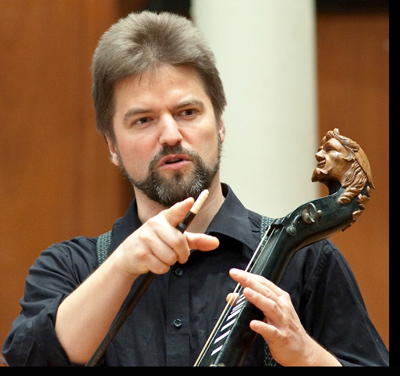 Thilo Hirsch studied viola da gamba and singing at the Schola Cantorum Basiliensis (SCB), as well as musicology and ethnomusicology at the University of Bern. Concert tours with international ensembles have led him throughout Europe, to North Africa, North and South America, and Japan. He has been the artistic director of the ensemble arcimboldo since 1991 and of the TEATRO ARCIMBOLDO since 1996. With these ensembles, he has performed at numerous festivals and recorded several CDs. Alongside his artistic work, Thilo Hirsch teaches viola da gamba and is frequently invited to teach at various early music courses. Between 2007 and 2015, he was the co-project leader of several research projects at the SCB that were funded by the Swiss National Science Foundation (SNSF) and the State Secretariat for Education, Research and Innovation (SERI). These projects encompassed not only research but also the reconstruction of the relevant instruments, such as the 2007–2009 SNSF project “La Grande Écurie: Research and reconstruction of the instruments and their repertoire at the court of Louis XIV and XV”, and the 2011–2015 SERI/SNSF project “Transformation of bowed string instruments in the early 16th century”. The ‘sonic’ results of these projects were documented in concerts and CDs by the ensemble arcimboldo. From 2019 to 2023, Thilo Hirsch led an SNSF research project at the Bern University of the Arts on the topic “Rabab & Rebec: Research on skin-covered bowed string instruments of the late Middle Ages and the early Renaissance and their reconstruction” (video recordings of the symposium concert can be found here). In 2025, he led the SNF Agora outreach project “The Rabab – A Sound of Ours!’. Thilo Hirsch studied viola da gamba and singing at the Schola Cantorum Basiliensis (SCB), as well as musicology and ethnomusicology at the University of Bern. Concert tours with international ensembles have led him throughout Europe, to North Africa, North and South America, and Japan. He has been the artistic director of the ensemble arcimboldo since 1991 and of the TEATRO ARCIMBOLDO since 1996. With these ensembles, he has performed at numerous festivals and recorded several CDs. Alongside his artistic work, Thilo Hirsch teaches viola da gamba and is frequently invited to teach at various early music courses. Between 2007 and 2015, he was the co-project leader of several research projects at the SCB that were funded by the Swiss National Science Foundation (SNSF) and the State Secretariat for Education, Research and Innovation (SERI). These projects encompassed not only research but also the reconstruction of the relevant instruments, such as the 2007–2009 SNSF project “La Grande Écurie: Research and reconstruction of the instruments and their repertoire at the court of Louis XIV and XV”, and the 2011–2015 SERI/SNSF project “Transformation of bowed string instruments in the early 16th century”. The ‘sonic’ results of these projects were documented in concerts and CDs by the ensemble arcimboldo. From 2019 to 2023, Thilo Hirsch led an SNSF research project at the Bern University of the Arts on the topic “Rabab & Rebec: Research on skin-covered bowed string instruments of the late Middle Ages and the early Renaissance and their reconstruction” (video recordings of the symposium concert can be found here). In 2025, he led the SNF Agora outreach project “The Rabab – A Sound of Ours!’.
|
|
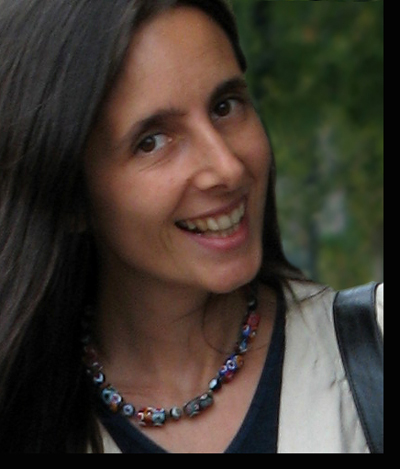 Abril Padilla (1970, Buenos Aires) lives in Basel. She divides her time between instrumental and electro-acoustic composition, improvisation, performing, music for films, the theater and dance. Studies: Conservatory of Buenos Aires (Argentina), Conservatoire National Supérieur de Paris (France), Master's degree in Musicology (University of Toulouse) and the electro-acoustic composition class of Erik Oña (ESB-Hochschule für Musik Basel). Winner of several competitions and awards: SonOhr 2015, Banc-d'essai GRM 2015, Sperber-Jugendförderpreis, "Luc Ferrari" Radiophonic Competition (WDR, Radio Suisse Romande and La Muse en Circuit), Phonurgia Nova, Radiophonic Art of Northern Spanish Radio, City of Bologna. In her compositional work she is interested in exploring links between period instruments and electro-acoustic music, as well as in combining conventional instruments and music produced using found objects. Recent commissions from the Eunoia Ensemble, ensemble arcimboldo and the ABC cultural centre (la Chaux-de-Fonds, Switzerland). abrilpadilla.net Abril Padilla (1970, Buenos Aires) lives in Basel. She divides her time between instrumental and electro-acoustic composition, improvisation, performing, music for films, the theater and dance. Studies: Conservatory of Buenos Aires (Argentina), Conservatoire National Supérieur de Paris (France), Master's degree in Musicology (University of Toulouse) and the electro-acoustic composition class of Erik Oña (ESB-Hochschule für Musik Basel). Winner of several competitions and awards: SonOhr 2015, Banc-d'essai GRM 2015, Sperber-Jugendförderpreis, "Luc Ferrari" Radiophonic Competition (WDR, Radio Suisse Romande and La Muse en Circuit), Phonurgia Nova, Radiophonic Art of Northern Spanish Radio, City of Bologna. In her compositional work she is interested in exploring links between period instruments and electro-acoustic music, as well as in combining conventional instruments and music produced using found objects. Recent commissions from the Eunoia Ensemble, ensemble arcimboldo and the ABC cultural centre (la Chaux-de-Fonds, Switzerland). abrilpadilla.net
|
|
| Andreas Böhlen – recorder, saxophon |
andreasboehlen.com |
| |
|
| Wilhelm Bruck –guitar |
www.paul-sacher-stiftung.ch/forschung/2010-zwei-mann-orchester/mitwirkende.html |
| |
|
| Helena Bugallo –piano |
www.bugallowilliams.com |
| |
|
| Juan Braceras – violin, Stroh-violin |
www.juanmariabraceras.com |
| |
|
| Giovanna Baviera – sopran, viola da gamba |
giovannabaviera.com |
| |
|
| Leonardo Bortolotto – viola da gamba, rabab |
www.rerenaissance.ch/musikerinnen/leonardo-bortolotto |
| |
|
| Titus Bellwald – tar, percussion |
titusbellwald.ch |
| |
|
Julian Behr – lute, vihuela de mano |
www.fhnw.ch/de/personen/julian-behr |
| |
|
| Anna-Lena Elbert – soprano |
www.doreenlutz.com/de/artists/elbert-anna-lena |
| |
|
| Peppe Frana – plectrum-lute |
labyrinthonline.org/i/peppe-frana |
|
|
| Brian Franklin – viola da gamba |
www.rerenaissance.ch/musikerinnen/brian-franklin |
| |
|
| Karel Fleischlinger – guitar, Bogengitarre |
www.fleischlinger.cz/instrumente.html |
|
|
| Franziska Finckh – viola da gamba |
www.escapades.de/portfolio/franziska-finckh |
| |
|
Lanet Flores – clarinet, bass clarinet |
www.musik-akademie.ch/en/offer/lessons-and-courses/detail/flores-lanet.html |
|
|
| Aleksander Gabrys – double bass |
de.wikipedia.org/wiki/Aleksander_Gabrys |
| |
|
| Mojca Gal – baroque violin, baroque dance |
www.mojcagal.com |
| |
|
| Anita Kuster – trombome, alphorn |
anita-kuster.ch |
| |
|
| Ian Harrison – shawn, bagpipes, cornett, Platerspiel |
www.ian-harrison.eu |
| |
|
| Ulrike Hofbauer – soprano |
www.ulrikehofbauer.com |
| |
|
| Jessica Horsley – viola da gamba, violone |
jessicaulusoyhorsley.com |
| |
|
| Tiago Teixera Leal – lute, theorbo |
www.facebook.com/tiago.t.leal |
| |
|
| Raphael Meyer – recorder |
www.facebook.com/raphaelbenjamin.meyer |
| |
|
| Hans-Christof Maier – recorder |
musik.ken.ch/Biomaier1.html |
| |
|
| Carolin Margraf – renaissance harp, harp |
www.facebook.com/carolin.s.margraf |
| |
|
| Mara Miribung – cello, Stroh-cello |
www.maramiribung.com |
| |
|
| Tobie Miller – hurdy-gurdy |
www.tobiemiller.net |
| |
|
| Ailen Monti – lute, guitar, percussion |
www.ailenmonti.com |
| |
|
| Grace Newcombe – soprano, harp |
www.rerenaissance.ch/musikerinnen/grace-newcombe |
| |
|
| Sophia Nidecker – tuba |
www.sophianidecker.ch |
| |
|
| Marc Pauchard – recorder, cornett |
www.capella-itineris.ch/marc-pauchard.html |
|
|
| Maria Luisa Pizzighella – percussion |
musicdirectory.ch/profiles/maria-luisa-pizzighella |
|
|
| Caroline Ritchie – viola da gamba |
carolineritchiegamba.com |
|
|
| Jonathan Romana – trompet |
www.facebook.com/jonath.romana |
|
|
| Ruben Mattia Santorsa – guitar, phono-ukulele |
www.rubenmattiasantorsa.com |
|
|
| Rui Stähelin – lute, chitarrone, bass |
www.rerenaissance.ch/musikerinnen/rui-staehelin |
|
|
| Charlotte Torres – piano, composition |
www.charlottetorres.ch |
|
|
| Félix Verry – rabab, rebec, fiddle, violin |
www.felixverry.com |
|
|
|